Genetic Disorders
Carried on chromosomes, our genes are known to be as both functional and basic physical units of heredity. Proteins are made by encoded instructions from genes. When genes alter, the proteins are unable to carry out their normal functions, thus resulting in genetic disorders. There are 3 different levels of categorizing genetic disorders:
| 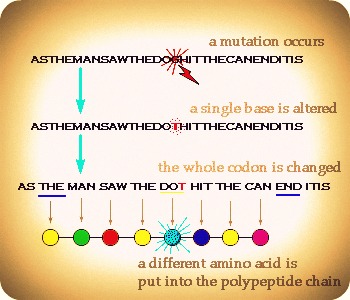 Because of a mutation, the new polypeptide that is created now has a different amino acid sequence. The effects of such change, can either be a small or a major issue. It all comes down to what function or role that the protein plays in the cell or organism that will determine how drastic the effects will be. |
Genetic disorders can be distressing, and can make a huge impact on a person’s life. Since there is a wide variety of chromosomal disorders, they each affect a person in different ways. Some disorders can cause a person to act obsessive and/or compulsive.Some can even lead to other health problems which affects the ability of a person to partake in everyday activities. Some chromosomal disorders can also affect a person’s capability of having children, whereas others can also create mental and/or physical disabilities.(citation 1.6) What can be done about genetic disorders that affect the lives of numerous amounts of people in the world? This is where gene therapy comes in and can change the lives of many for a better future! |
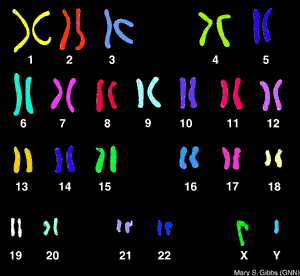
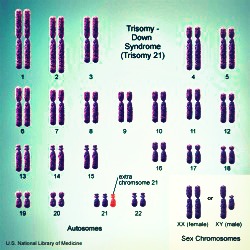
The picture on the left shows how a chromosome chart of a normal person without genetic defects would look like. On the right, the chart shows chromosomes of a person who has Trisomy-Down Syndrome. As you can see, there is an extra chromosome on 21. Differences like these can drastically change a person's life. |
What is Gene Therapy?
Currently, in our time today, gene therapy is an experimental procedure which involves the transfer of genetic material into cells or tissues to prevent or even cure a disease.It is still under development because there is still much research to be done,especially on making safe and efficient vectors for gene transfer.What makes Gene Therapy a better option to choose rather than the other types of treatments that are also offered? Gene Therapy is more of a permanent procedure. Since it offers a permanent cure, gene therapy is more efficient and cost-saving. Gene therapy at this time is being researched for number of diseases affecting so many lives, such as Cancer, Hemophilia, Parkinson’s disease, Alzheimer’s, and many more!
Researchers are investigating many different ways to correct defective genes in order to cure that disease, or to even help a person’s body ( who is diagnosed with the disease) fight it. Some of the ways are:
| Click on this video to find out more about Gene Therapy from Dr. Ann Stapleton, an assistant professor at University of North Carolina at Wilmington! |
